

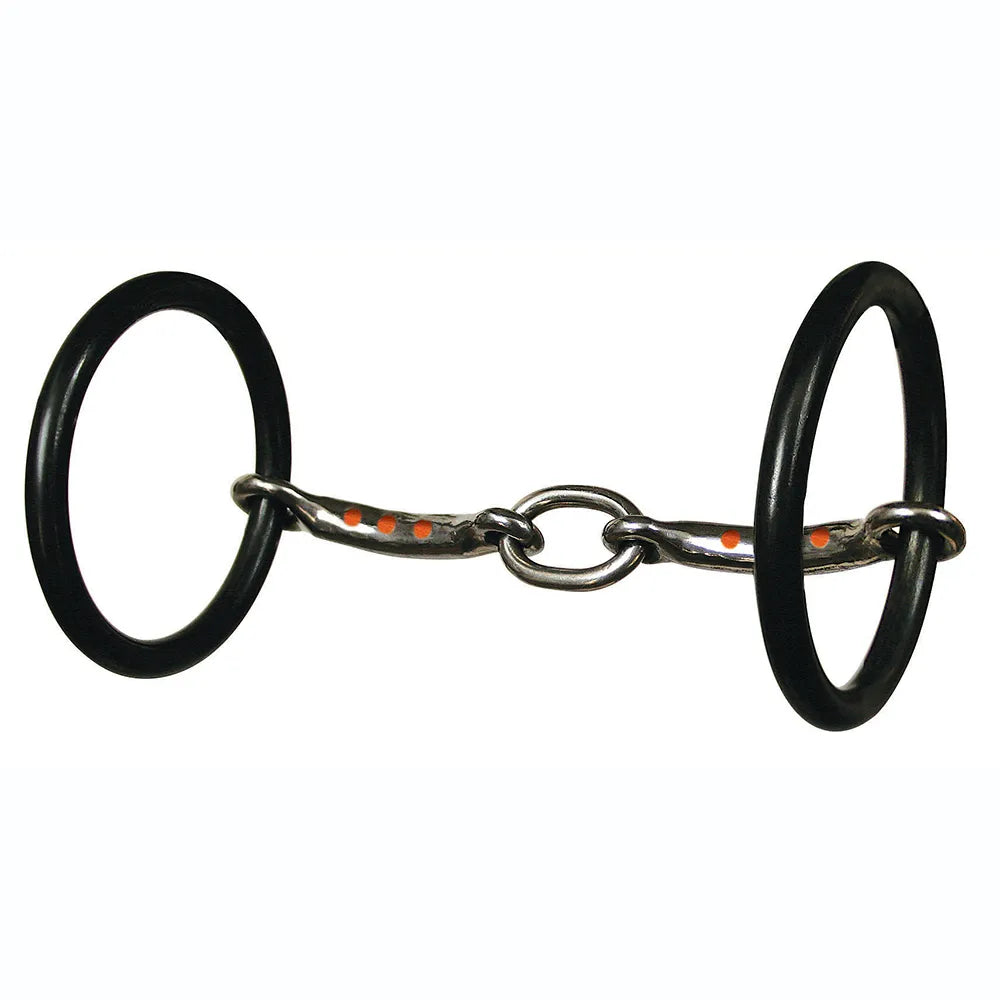
Barrel Racing Bits - When a Bit Can Be a Lot: Understanding the Different Types of Bits and How They Affect Your Horse
In barrel racing, the bit plays a crucial role in controlling speed and turns. However, using the wrong type of bit can negatively impact your horse’s comfort and performance. Here's a guide to understanding the most common types of barrel racing bits and how they work.
1. Snaffle Bits
A snaffle bit is one of the mildest types and is often used in training young horses or those sensitive to pressure.
- Effect: Direct pressure on the bars and tongue, promoting clear communication without causing excessive force.
- When to Use: Great for horses that respond well to minimal pressure or during early training phases.
2. Shank Bits
Shank bits come with a lever action and are typically used for more experienced horses.
- Effect: The longer the shank, the more leverage is applied, increasing the control a rider has over the horse’s speed and direction.
- When to Use: Best for experienced riders with horses that are fully trained in barrel racing. Bits like the Reinsman Sherry Cervi Short Shank Bit provide leverage without overwhelming the horse.
3. Combination Bits
A combination bit combines elements of a snaffle and shank, distributing pressure across multiple points on the horse’s head.
- Effect: Applies pressure on the nose, chin, and poll, offering a balanced approach for horses that need extra guidance during turns.
- When to Use: Useful for horses that require more control during sharp turns but still need a softer approach at higher speeds.
4. Gag Bits
A gag bit is designed to increase control, particularly for horses that are prone to lifting their heads or resisting rein pressure.
- Effect: The gag action increases poll pressure, encouraging the horse to lower its head.
- When to Use: Ideal for high-energy horses that tend to get excitable during a run. However, gag bits should only be used by experienced riders to avoid overuse.
5. Ported Bits
A ported bit is used for more advanced horses. The higher the port, the more pressure is applied to the horse's mouth.
- Effect: Ported bits put pressure on the roof of the horse’s mouth and are designed to give the rider more control during quick turns and stops.
- When to Use: Best for seasoned barrel racers who need precise control during runs.
Understanding these different types of bits, especially those made by Reinsman, helps you make informed decisions that benefit both you and your horse. The right bit can improve communication and enhance performance, while the wrong one can cause discomfort or even resistance during the race.
Check out our range of Reinsman bits to find a bit to match you and your horse.

Written by Melissa Milton

Leave a comment
This site is protected by hCaptcha and the hCaptcha Privacy Policy and Terms of Service apply.